
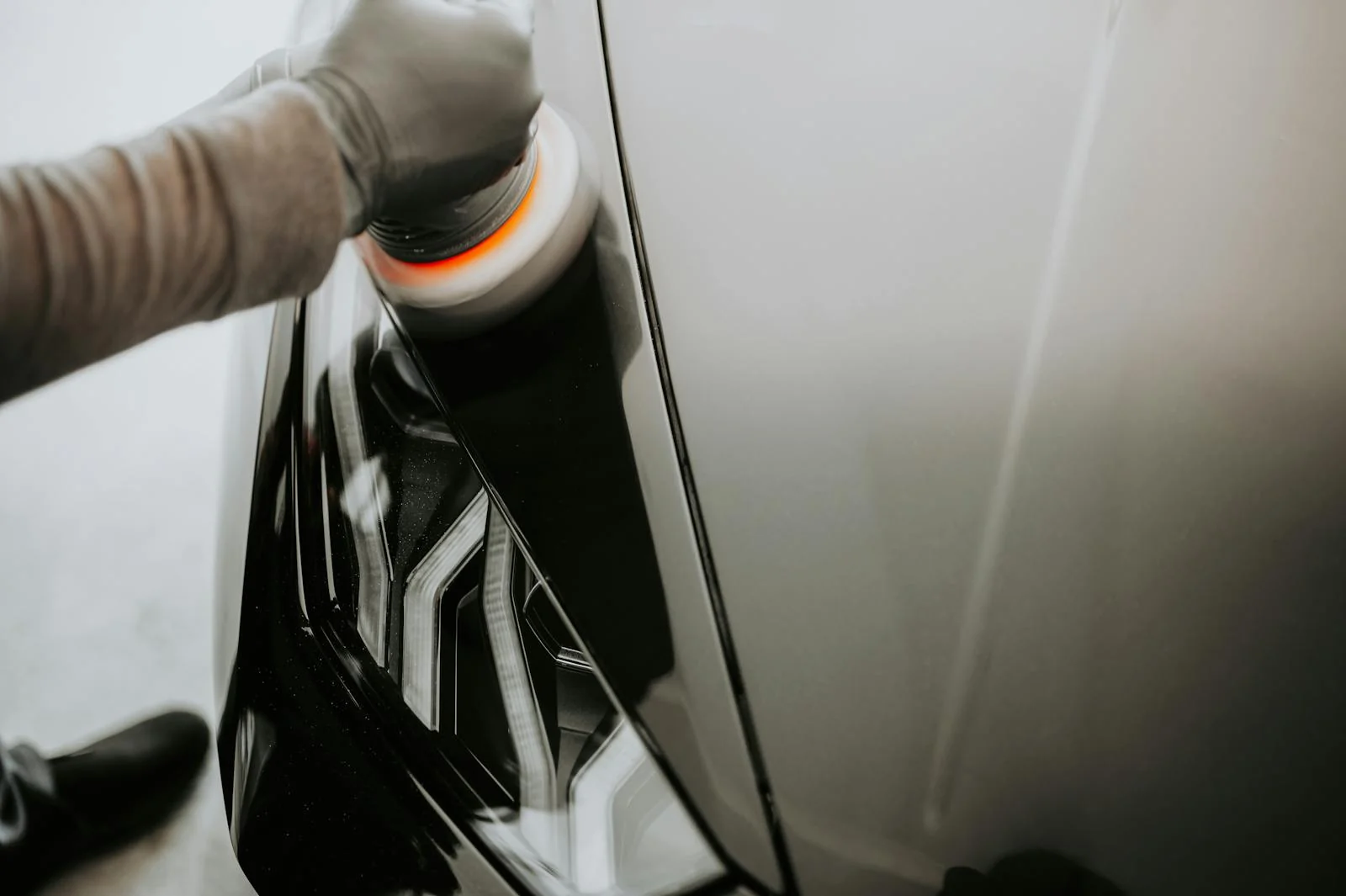
If your car’s headlights have gone from clear to milky-yellow over the last few years, you’re not just losing curb appeal. You’re losing as much as 80 percent of your effective nighttime visibility. Headlight restoration is one of the lowest-cost, fastest-turnaround services a body shop offers, and it makes a measurable difference in how safely your car drives after dark. Here’s why headlights yellow, why DIY kits don’t last, and what professional restoration actually involves.
Why Headlights Yellow and Haze Over Time
Modern headlight lenses are made of polycarbonate plastic, which is light, impact-resistant, and easily molded into the complex shapes designers want. The downside: polycarbonate is very vulnerable to ultraviolet light. From the factory, lenses come with a thin UV-protective coating that breaks down over years of sun exposure. Once that coating fails, UV radiation, road grit, salt spray, and engine bay heat oxidize the plastic, causing the yellow haze you see.
Minnesota’s combination of brutal sun in summer and constant salt spray in winter accelerates this process. Most cars older than five years show visible degradation; cars older than ten almost always need restoration.
The Real Cost of Cloudy Lenses
Independent testing has shown that fully clouded headlights can reduce light output by 50 to 80 percent compared to clear lenses, even with the same bulbs. That means slower reaction time at night, less ability to see pedestrians and animals, and longer stopping distances on dark roads. In Minnesota, where deer activity peaks at dusk and rural roads are unlit, this is a genuine safety issue, not a cosmetic one.
Cloudy headlights also signal age and neglect on a vehicle that may otherwise be in great shape, lowering resale value and curb appeal disproportionately to the actual cost of fixing them.
Why DIY Kits Don’t Last
You can buy a $25 headlight restoration kit at any auto parts store, and it will absolutely make your lenses look better, for about three to six months. The reason it doesn’t last: most kits include sandpaper and polishing compound but not a true UV-protective topcoat. Once the polish wears off, the bare polycarbonate is exposed to UV again and re-yellows faster than it did the first time, because you’ve removed the original protective layer.
Professional restoration includes a multi-stage wet sanding, polishing, and a UV-stable clear coat that bonds to the lens. Done right, it lasts two to four years, sometimes the rest of the vehicle’s life.
Conclusion
Cloudy headlights are one of the easiest, most affordable upgrades you can make to your car’s safety and appearance. Done professionally, with a real UV topcoat, the result lasts years and dramatically improves nighttime driving.
Best Auto Body in Blaine offers professional headlight restoration with a UV-protective finish that outlasts any DIY kit. Call (612) 272-7822 or visit bestautobodyllc.com to schedule.