
"How long is this going to take?" is the first question most drivers ask after dropping their car off for collision repair, and the honest answer is: anywhere from one day to a month, depending on a dozen variables most people never see. Repair timelines aren’t padding or stalling; they reflect the real work, the parts pipeline, and the insurance dance happening behind the scenes. Here’s a transparent look at what actually drives the clock.
Why Every Repair Timeline Is Different
A scuffed bumper that needs paint blending might be a one-day job. A fender bender that requires a new bumper, headlight, hood, and minor frame straightening could take five to seven business days. A serious collision involving airbag deployment, structural rails, suspension components, and ADAS recalibration can stretch to three weeks or more. The variables that move the clock are damage severity, parts availability, paint and bake time, ADAS calibration requirements, and the back-and-forth with your insurance carrier.
None of these are within your shop’s full control. A good shop manages them well; no shop can eliminate them.
The Real Stages of a Collision Repair
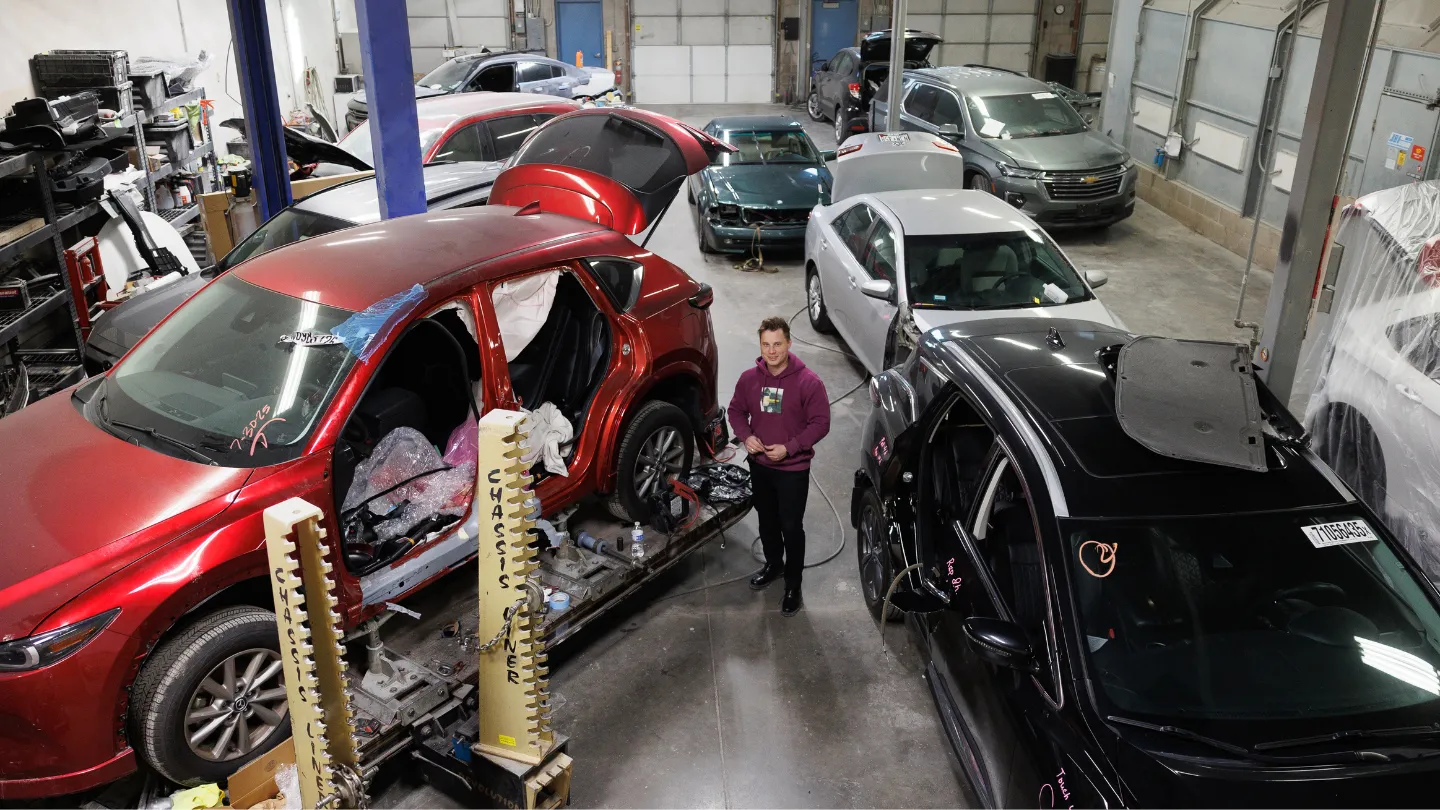
Stage one is the initial estimate, usually same-day or next-day. Stage two is teardown, where the technician removes damaged panels to find hidden damage; this often produces a "supplement" to the estimate that needs new insurance approval. Stage three is parts ordering and arrival, which can be hours for common items or weeks for backordered parts on newer or rare vehicles. Stage four is bodywork: straightening, panel replacement, and welding. Stage five is preparation and paint, including baking and curing. Stage six is reassembly, ADAS calibration, and quality control. Each stage has dependencies, so a delay in one ripples downstream.
For an average insurance-handled repair, you can expect roughly 40 to 50 percent of the calendar time to involve waiting on parts or approvals, not active work on the car.
Common Reasons Repairs Take Longer Than Expected
The single most common delay is supplement approval: when teardown reveals damage that was not visible in the initial estimate, the insurance company has to reauthorize the new scope before parts can be ordered. The second is parts backorder, especially on EVs, recent model-year vehicles, and trucks with long-bed or specialty trim configurations. Third is ADAS calibration, which often requires sending the vehicle to a specialist or doing a road test on a clear day with good visibility.
Paint can also be a bottleneck in winter, when bays compete for time and humidity has to be controlled.
Conclusion
Auto body repair takes as long as it takes, and the right number for your specific repair depends on damage, parts, paint, and the carrier. The shops that deliver on their estimates do so by communicating clearly and managing every stage actively, not by cutting corners.
Best Auto Body in Blaine gives every customer a realistic timeline at drop-off, updates you as supplements are approved, and works to deliver your vehicle as soon as the work is genuinely complete. Call (833) 365-5545 or visit bestautobodyllc.com for an estimate.