
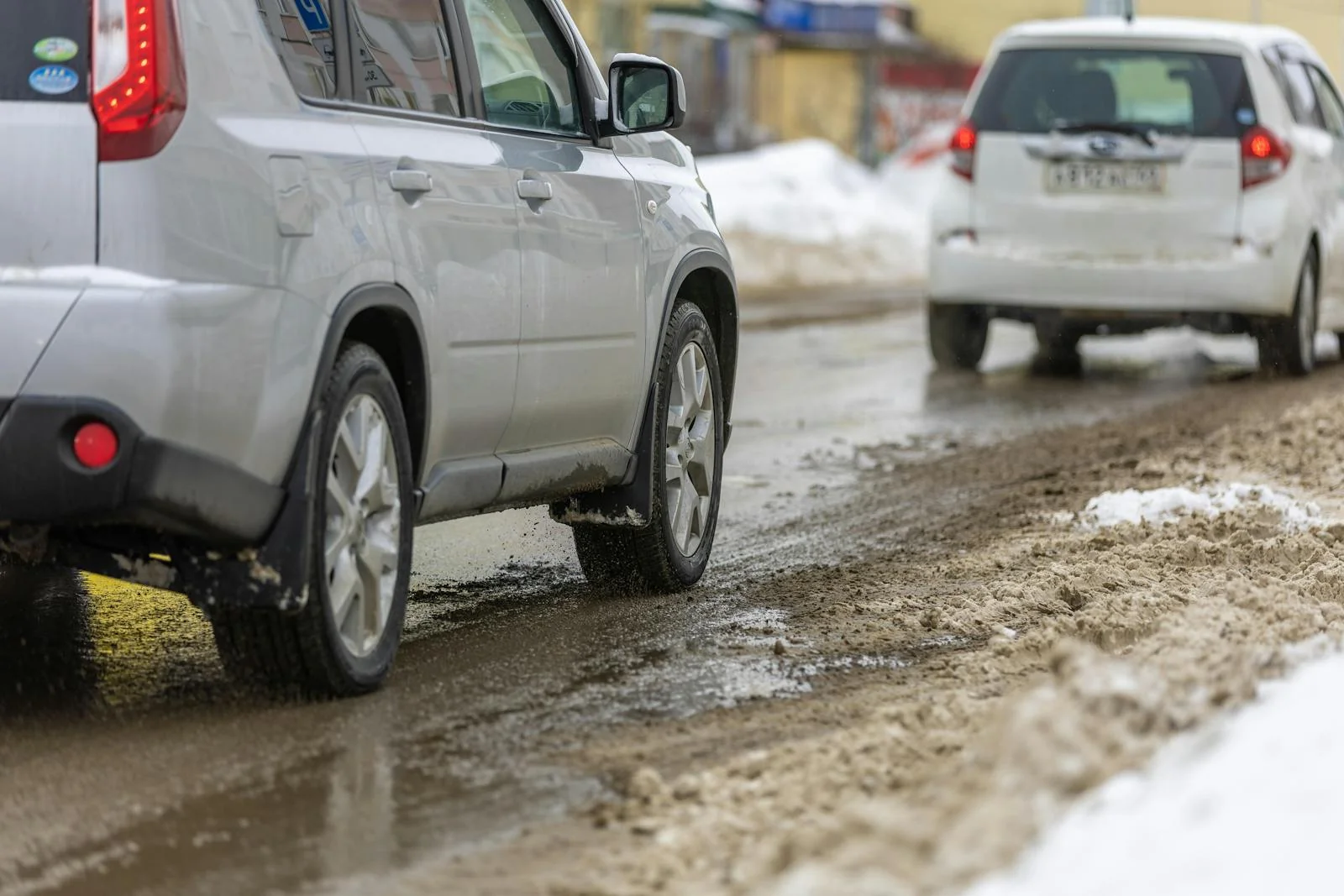
If you’ve spent a winter in Minnesota, you know what road salt looks like by spring: a chalky white film coating every panel, wheel arch, and rocker. That film isn’t just unsightly. It’s actively eating into the metal underneath any chip, scratch, or stone strike on your car. Protecting your car’s paint from Minnesota road salt is one of the most cost-effective things you can do for your vehicle’s long-term value, and it starts well before the first snowfall.
Why Minnesota Road Salt Is So Aggressive on Paint
Sodium chloride, the most common de-icing compound spread by MnDOT and city plows, lowers the freezing point of water. The same chemistry that melts ice also creates a brine that clings to your undercarriage, wheel wells, and lower panels for weeks at a time.
When that brine finds even a microscopic crack in your clear coat, it accelerates oxidation of the bare metal beneath. What might have stayed a harmless paint chip in a dry climate becomes the starting point of a rust bubble within a single Minnesota winter. Sub-zero temperatures make things worse: cold makes paint and clear coat slightly brittle, so road debris causes more chips than it would in summer.
The Three Most Vulnerable Areas on Your Car
Not every panel takes equal abuse. The areas most likely to develop salt-driven rust are the rocker panels (the metal strip below your doors), the inside lip of your wheel arches, and the lower edges of your bumpers and quarter panels. These zones get hit constantly by spray from your own tires, and brine collects in seams where it can sit undisturbed for days.
Less obvious but equally important: the underside of your hood near the windshield, where salt-laden snow piles up and slowly melts every time you park in a heated garage. Anything with a paint chip in these zones is a rust candidate the moment salting season starts.
A Pre-Winter Routine That Actually Works
The single best protection is touch-up, then sealant. Walk around your car in late October with a small flashlight and look for any paint chip down to bare metal. Touch them up with a color-matched paint pen or, if there are several, bring the car in for professional spot repair. Then apply a quality wax or paint sealant, paying special attention to the lower body. A ceramic coating offers even better protection but is best applied at a shop with the right prep environment.
During winter, rinse the underside of your car at a touchless car wash every two to three weeks, especially after road treatments. The goal isn’t a showroom shine. It’s flushing brine out of seams and wheel wells before it has time to work.
Conclusion
Minnesota winters are brutal, but salt damage isn’t inevitable. Catch chips early, seal your paint before salt season, and rinse the undercarriage often. If you see paint bubbling, surface rust, or panels that have started to flake, it’s time for professional repair. Caught early, surface rust can be sanded, treated, and refinished. Caught late, it can require full panel replacement.
At Best Auto Body in Blaine, we see Minnesota’s worst salt damage every spring and offer rust remediation, paint refinishing, and panel repair built for our climate. Visit bestautobodyllc.com or call (612) 272-7822 to schedule a pre-winter or post-winter inspection.