
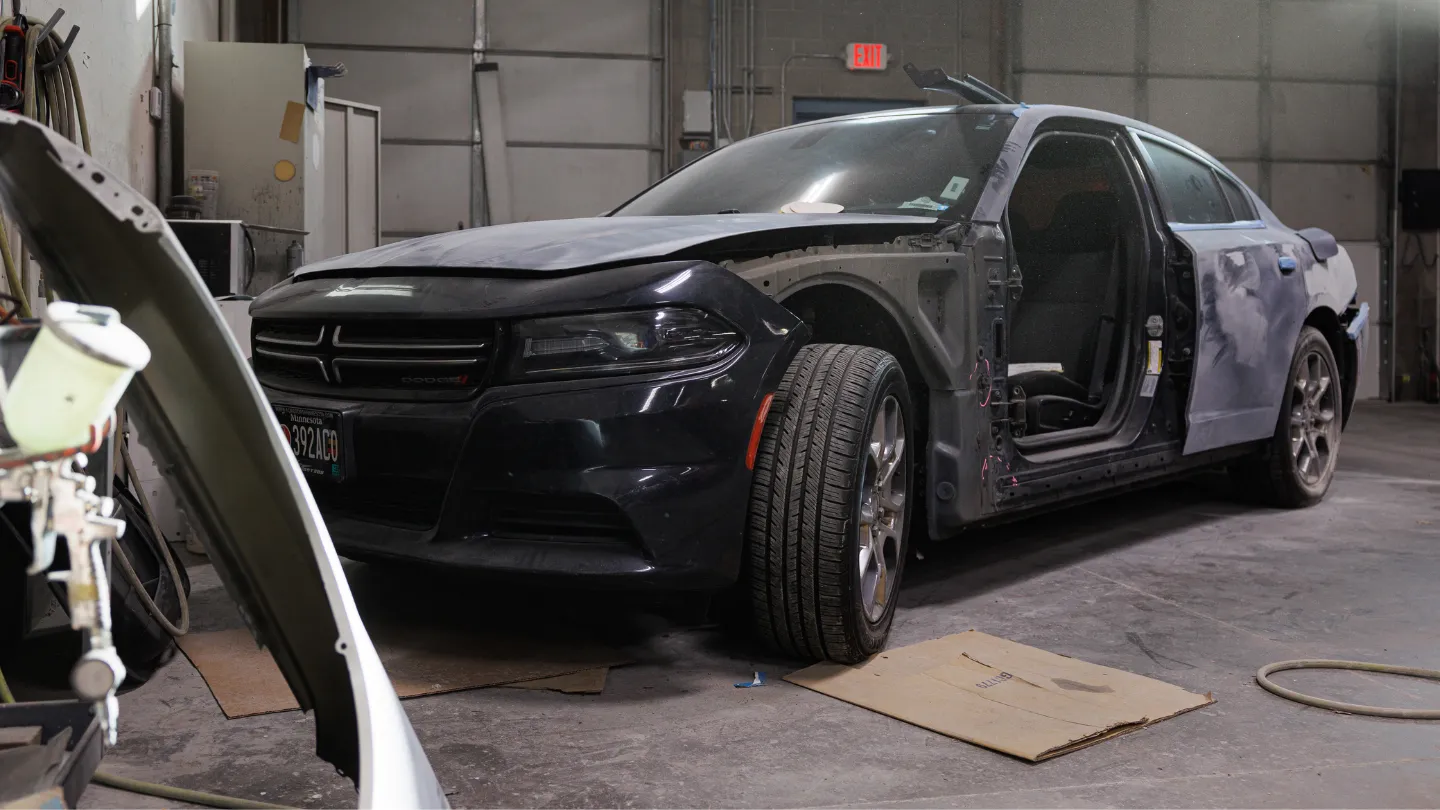
Twenty years ago, fixing a fender meant straightening metal, blending paint, and sending you on your way. Today, that same fender repair might require a sensor recalibration before your car is truly road-ready. Welcome to the era of Advanced Driver Assistance Systems (ADAS), where lane-keep assist, automatic emergency braking, blind-spot monitors, and adaptive cruise control rely on cameras and radar mounted in your windshield, bumpers, and side mirrors. After almost any collision repair, those systems need to be recalibrated, and skipping that step is a serious safety problem.
What ADAS Actually Controls on Your Car
ADAS is the umbrella term for the safety technology that watches the road for you. On a typical 2020-or-newer vehicle, that can include forward collision warning, automatic emergency braking, lane departure warning, lane-keep assist, adaptive cruise control, blind-spot monitoring, rear cross-traffic alert, and parking assist. Each of these systems depends on at least one sensor: a camera behind the windshield, a radar in the bumper, ultrasonic sensors in the doors and quarter panels, or some combination.
These sensors are aimed with extreme precision. A camera that’s off by one degree at the windshield can be off by several feet at a hundred yards down the road, which is exactly the distance where it’s supposed to be detecting a stopped car or a pedestrian.
Why Even Minor Repairs Throw It Off
Replacing a windshield, repainting a bumper, swapping a side mirror, doing alignment work, or even replacing a battery on certain vehicles can require recalibration. Anything that physically moves a sensor or removes the surface it sits behind triggers the requirement. Manufacturer service manuals are explicit about this, and they’re not negotiable; insurance companies pay for it because the alternative is a system that fails silently when you need it most.
This is why so many collision repairs that "look simple" now run two or three days longer than they did five years ago. The work isn’t just bodywork anymore.
Static vs. Dynamic Calibration
There are two main types. Static calibration is done in the shop with the vehicle parked in a controlled environment, using OEM-specified targets at precise distances and angles in front of the cameras. Dynamic calibration is done on the road, where the technician drives the vehicle at specified speeds while the system learns its surroundings. Many vehicles need both, in a specific sequence, before the systems will reset.
Doing this correctly requires manufacturer-specific scan tools, target boards, and a level shop floor with adequate space. It’s not a job for a generalist; it requires training and certifications.
Conclusion
If your car is from roughly 2018 or newer and you’ve had any work done that involved the windshield, a bumper, the suspension, or alignment, ask your shop directly: was an ADAS calibration performed and documented? If the answer is no, you’re driving with safety systems that may or may not actually work.
Best Auto Body in Blaine performs in-house ADAS calibration with manufacturer-spec equipment and provides documentation with every repair that needs it. Call (833) 365-5545 or visit bestautobodyllc.com with questions.